
LOFTON · SERVICES
PLANTING
& DESIGN. — Planting & Landscape Design, Lakeville MN — Zone 4b/5a — Lofton Landscaping, serving Lakeville, Savage, Prior Lake, Burnsville, Apple Valley, Rosemount, Farmington and Eagan.
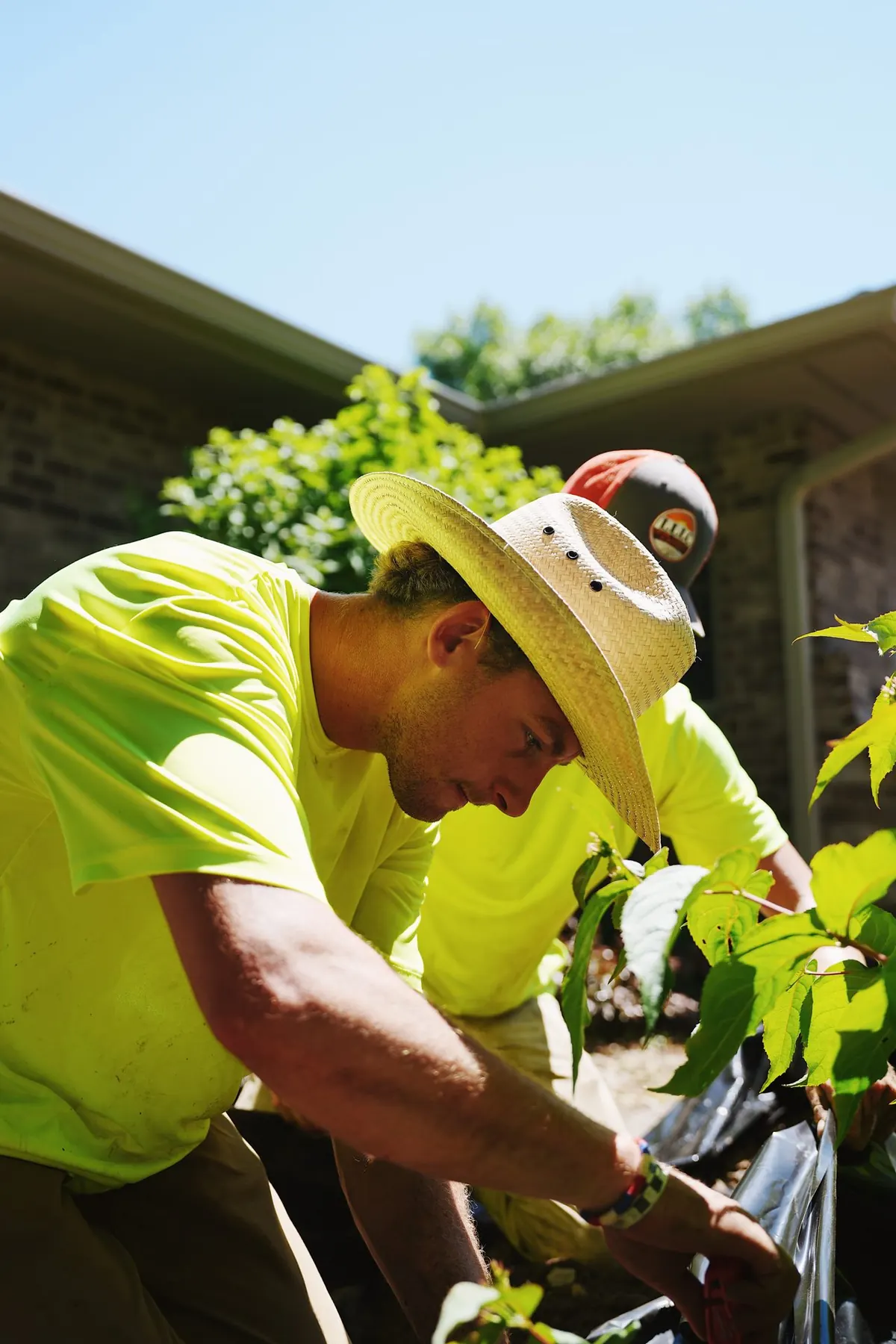
Zone-appropriate plants, planted the way they need to be planted. Nothing goes in that can't survive a bad February.
What's included
- Site assessment — sun, shade, drainage and exposure, honestly recorded
- Plant selection rated for zone 4b/5a, not for the garden centre's catalogue
- Holes dug wide, not deep, with the root flare left visible
- Root-bound stock scored and teased out before it goes in
- Mulch ring pulled back off the stem
- Staking only where the site actually needs it
Zone 4b/5a is a hard filter, not a suggestion
The south metro sits right on the 4b/5a line, and a plant rated for zone 5b will look fine for two or three mild years and then die in a single bad winter. That's the most common way homeowners lose money on landscaping around here — a plant that was never going to make it, sold as if it would.
We spec to the colder rating rather than the optimistic one. It rules some things out, and it means the bed you pay for is still the bed you have in five years. Where a customer wants something marginal we'll plant it, but we'll say plainly that it's a gamble rather than letting them find out in April.
Exposure matters as much as the rating. A shrub on a sheltered east wall survives conditions that kill the same shrub on an open, wind-scoured Rosemount lot. We plan around the actual site, not the map.
Most planting failures happen in the first ten minutes
Planting too deep is the single most common killer of new trees and shrubs, and it's invisible for years while the plant slowly declines. The root flare — the point where the trunk widens into the roots — has to sit at or slightly above finished grade. Buried, it holds moisture against the bark and rots.
The hole is dug wide rather than deep. Roots spread laterally through the top foot of soil, so a wide, shallow, roughened-sided hole gives them somewhere to go; a narrow deep one just makes a pot out of the surrounding soil.
Container stock almost always comes root-bound, circling the inside of the pot. Those roots don't spontaneously straighten out once planted — they keep circling and eventually girdle the plant. They get scored and teased apart before the plant goes in. It looks brutal and it's the difference between establishing and stalling.
Design that accounts for the plant's actual size
The other reliable failure is spacing. Nursery stock is small and beds look sparse when they're planted correctly, so the temptation is to fill the gaps — and four years later the whole bed is a crowded mass with plants shading each other out and shrubs pressed against the siding.
We space to mature size and use annuals or fast perennials to fill the gaps in the meantime. It requires a bit of patience in year one and it's the reason well-planted beds look better every year rather than worse.
Structure comes first: a few larger anchors that hold the shape through winter, then layers around them. In a climate where you're looking at the bed through snow for four months, what it does in January matters as much as what it does in June.
Read the site
Sun, shade, drainage, exposure and what's already failing there. The site decides the plant list.
Plan and price
A plant list and layout with mature sizes accounted for, quoted flat before anything is ordered.
Plant to establish
Wide holes, flare visible, roots teased out, mulched and watered in. Then a watering schedule you can actually follow.
What it
costs.
Planting is quoted per project — material plus installation, with the design work included rather than billed separately on residential jobs. The biggest variable is plant size at install: larger stock costs considerably more and, counter-intuitively, often establishes more slowly than smaller stock planted well. We'll usually recommend the middle size and tell you why.
GET A FLAT QUOTECommon
questions.
What planting zone is the south metro?+
Right on the 4b/5a boundary. We spec to the colder end of that, because a plant rated 5b will get through two mild winters and then die in the third — and that's the homeowner's money, not ours.
When is the best time to plant?+
Spring after the ground thaws, or late summer into early fall so roots establish before freeze-up. Mid-summer planting works but demands consistent watering to survive the heat.
How much do I need to water new plants?+
Deeply and infrequently — a long soak once or twice a week beats a daily sprinkle, which only wets the surface and encourages shallow roots. First season matters most; we'll leave you a schedule for what we planted.
Do you guarantee plants?+
We stand behind installation — plants that fail because of how they went in are on us. Ask at quote stage and we'll be specific about what's covered on your job.
Available across the south metro
Often booked together
Get a number on it.
Call or text 952-737-9376. Flat quote in 24 hours, no contracts.