
LOFTON · SERVICES
MULCH &
ROCK BEDS. — Mulch & Rock Bed Installation, Lakeville MN — Lofton Landscaping, serving Lakeville, Savage, Prior Lake, Burnsville, Apple Valley, Rosemount, Farmington and Eagan.
Re-edged, weeded, lined and dressed properly — so the bed still looks like a bed in September.
What's included
- Beds hand-weeded down to the root before anything goes on top
- Crisp spade-cut edge, re-established every spring
- Landscape fabric where it helps and honest advice where it doesn't
- Fresh hardwood mulch or washed river rock, laid to depth
- Mulch pulled back off trunks and stems, not piled against them
- Old, matted mulch removed rather than buried under new
The edge is doing most of the work
A sharp spade-cut edge is the single highest-impact thing you can do to a planting bed, and it's the part most often skipped because it doesn't photograph as obviously as fresh mulch. A clean four-inch trench edge separates bed from lawn visually, physically stops turf runners from creeping in, and holds mulch inside the bed where you paid to put it.
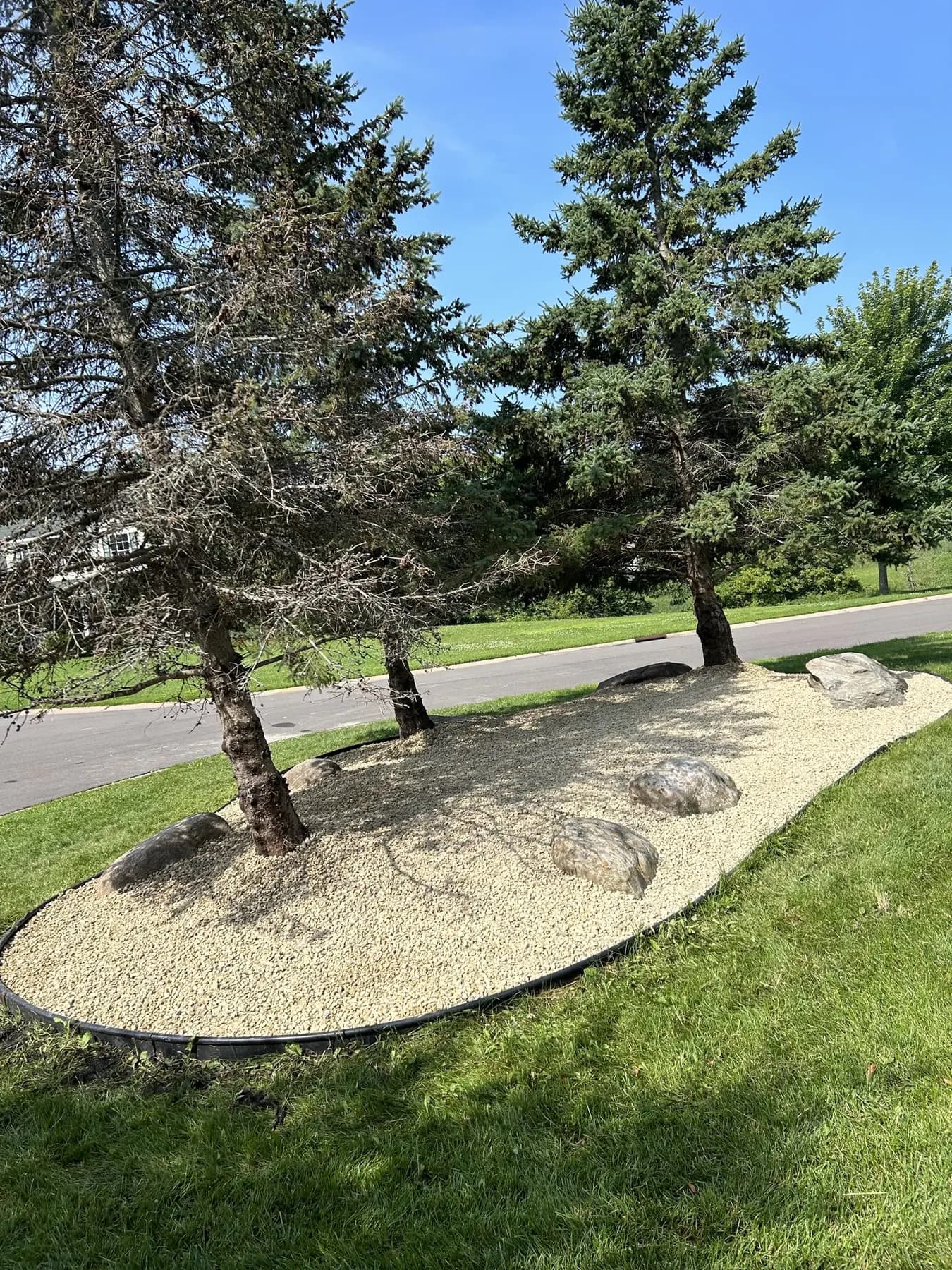
Plastic and metal edging both have their place, but neither one beats a properly cut trench for the look. Edging strips heave in Minnesota freeze-thaw and end up standing proud of the ground in a couple of years, which is worse than nothing.
We re-cut edges every spring as part of bed maintenance. It's a small job that makes the whole property read as maintained.
Mulch or rock — they aren't interchangeable
Hardwood mulch breaks down over two or three years, which is a feature: it feeds the soil and improves structure as it goes. That makes it the right choice around anything you actually want to grow — perennials, shrubs, young trees. The cost is that it needs topping up, and on a slope it floats away in heavy runoff.
River rock never breaks down, so it never feeds anything — which is exactly why it's right for foundation strips, drip lines, drainage runs and slopes where mulch would wash into the street. It also means a rock bed is close to permanent, so the bed shape has to be right the first time.
The wrong-headed version, which we see constantly, is rock installed around plants that wanted mulch. The soil underneath compacts, nothing feeds it, and the plants slowly decline while the bed looks fine. We'll tell you which one your specific bed wants, even when it's the cheaper option.
Depth, fabric, and mulch volcanoes
Mulch goes down at two to three inches. Less and weeds get light; more and you're suffocating roots and holding water against stems. On a re-mulch we'll pull off old matted material rather than layering onto it, because six inches of accumulated mulch is a genuine problem, not a well-maintained bed.
Landscape fabric gets used where it earns its place — under rock, in a foundation strip, under a path. In an active planting bed it's usually a mistake: it blocks the organic matter you want reaching the soil, and within two years weeds are rooting in the mulch on top of it anyway.
And mulch never touches the trunk. Piling it into a cone against the bark — the 'mulch volcano' you see on half the commercial properties in the metro — holds moisture against the trunk, invites rot and encourages girdling roots. We pull it back a few inches and leave the flare visible.
Walk the beds
We look at what's there, what's failing and what the bed is actually for before quoting a material.
Clean out and re-edge
Weeds out at the root, old matted material removed, edge trenched fresh.
Dress to depth
Mulch or rock laid to the right depth, pulled back off stems, hard surfaces blown clean.
What it
costs.
Bed work is quoted by area and material volume, with the clean-out and edging priced as part of the job rather than as extras. Rock costs more up front than mulch and effectively never needs replacing; mulch is cheaper per install and wants topping up every year or two. We'll give you both numbers so you can compare on total cost rather than install price.
GET A FLAT QUOTECommon
questions.
How often does mulch need replacing?+
A top-up every year or two keeps the colour and the depth right. A full clean-out is worth doing every three or four years, because old mulch compacts into a mat that sheds water instead of letting it through.
Should I use landscape fabric?+
Under rock, in foundation strips and under paths, yes. In an active planting bed, usually not — it blocks organic matter from reaching the soil and weeds end up rooting in the mulch above it anyway.
My rock bed is full of weeds. Can it be saved?+
Almost always. The weeds are growing in the silt and organic debris that's settled between the stones, not in the soil below. The rock gets lifted and washed or replaced, the base is redone, and it goes back looking new.
Available across the south metro
Often booked together
Get a number on it.
Call or text 952-737-9376. Flat quote in 24 hours, no contracts.